
SOS – the flooding of Sloppy Online Surveys causes more harm than good.
I believe that customer understanding is important for success. Wanting to deeply understand the customer’s driving forces: what they say, how they think, and how they actually make their purchasing decisions, is incredibly important information for companies and brands that want to develop their offering and their relationship with their customers.
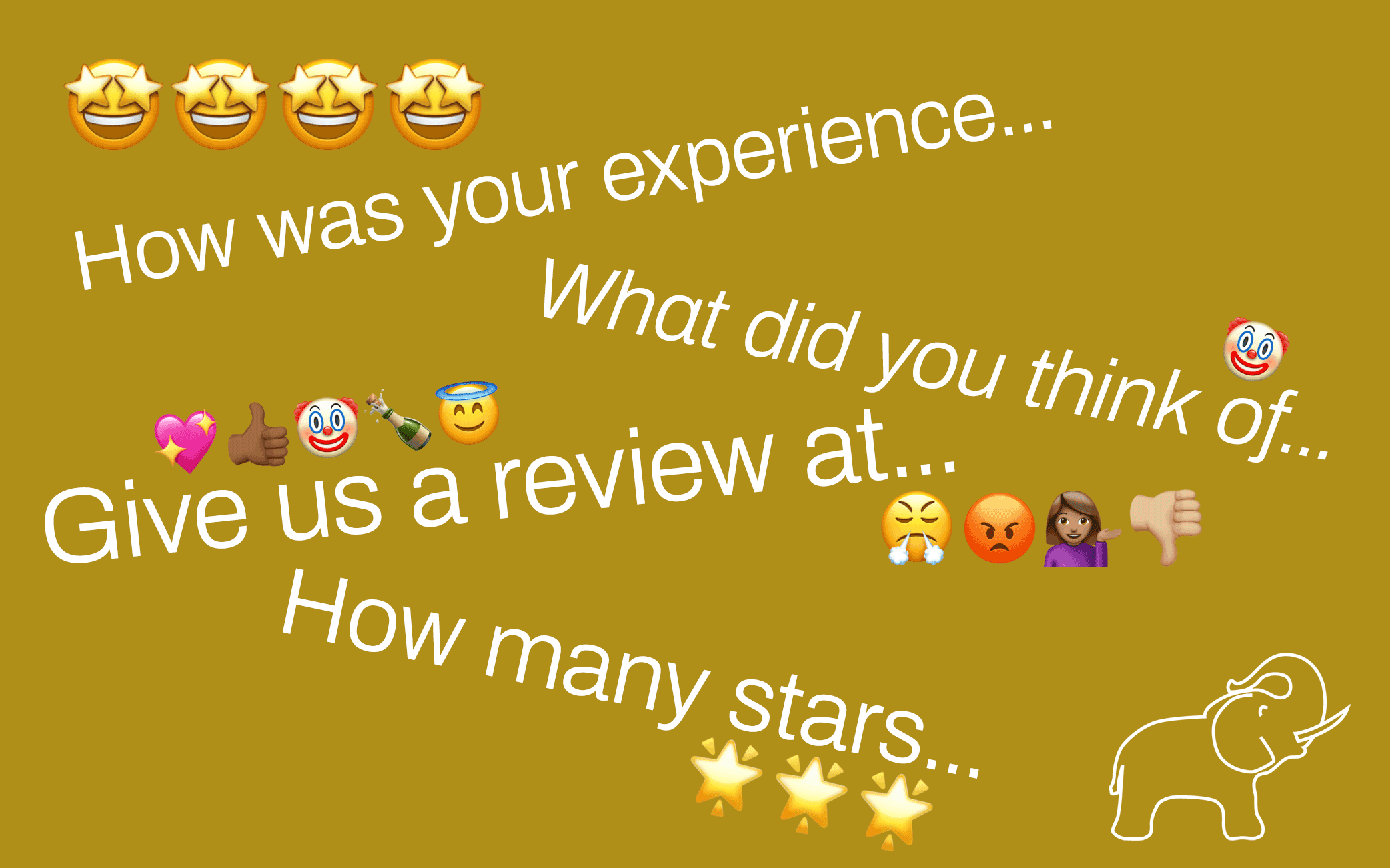
But… as soon as I use an app, eat at a restaurant, buy a product or service, go to a concert, or use a public service, I receive an email that begins as above. I imagine this is a common experience shared by many – surveys for the sake of surveys. My question is: Why do we do this?
Of course, broad quantitative surveys have value. What has become a problem is that there are too many, and they occur far too often. As a result, I experience survey fatigue, which means I typically throw them in the trash before even looking at them. When I do fill one out, I often choose the simplest answers that require the least effort from me. And that is not good for anyone. It leaves a bitter aftertaste for the customer, and the answers, which should guide decisions, risk leading us astray.
There are four main reasons why it has ended up like this:
- Proactivity – demonstrating that you are actively making a contribution
- Actions – identifying things to act upon
- Result driven – being able to show results to managers
- Easy – it’s really easy
Proactivity – demonstrating that you are actively making a contribution
Being proactive is considered good, and by actively asking for customers’ opinions, you are doing something. An active action that justifies your work and gives concrete, measurable results. Proactivity is good. But there must be a thought about why you are investigating and how to best obtain the crucial answers. I feel that this thought is often missing.
Actions – finding things to act on
Marketing departments are constantly looking for things to act on. The organization asks for actions, and with a large volume of surveys, you get answers that can be converted into actions. But if it is for the sake of actions, regardless of what the basis looks like, you risk being counterproductive.
Result-driven – being able to show results to managers
Today, there is an expectation to deliver measurable results, and we probably all want to see that. Me too. But if KPIs for measurable results are based on what can be measured rather than what actually makes the most difference, you become ineffective and risk “looking for the lost keys under the street lamp because that’s where the light is”.
Most things can be measured, but it’s important to anchor the measurement in an insight into what really makes a difference.
Easy – it’s really easy
And, of course, putting together a survey is a piece of cake. Anyone can do it and you’re happy to squeeze in all the questions you can think of – with the result that the answers become fewer when people get tired, or they become incorrect when they adapt their answers to end the survey as quickly as possible.
Summary
I know that surveys are important and necessary, but I think the avalanche of surveys we are faced with today is counterproductive. If you want answers with true value, you often need to combine quantitative volumes of questions with qualitative interviews that go in-depth. It requires more effort, but the likelihood that we act on the wrong decision-making basis decreases, leading to better-informed choices.
And, btw, I’d appreciate it if you could leave a rating of this article below. Just kidding 😉
SOS – the flooding of Sloppy Online Surveys causes more harm than good.
I believe that customer understanding is important for success. Wanting to deeply understand the customer’s driving forces: what they say, how they think, and how they actually make their purchasing decisions, is incredibly important information for companies and brands that want to develop their offering and their relationship with their customers.
But… as soon as I use an app, eat at a restaurant, buy a product or service, go to a concert, or use a public service, I receive an email that begins as above. I imagine this is a common experience shared by many – surveys for the sake of surveys. My question is: Why do we do this?
Of course, broad quantitative surveys have value. What has become a problem is that there are too many, and they occur far too often. As a result, I experience survey fatigue, which means I typically throw them in the trash before even looking at them. When I do fill one out, I often choose the simplest answers that require the least effort from me. And that is not good for anyone. It leaves a bitter aftertaste for the customer, and the answers, which should guide decisions, risk leading us astray.
There are four main reasons why it has ended up like this:
- Proactivity – demonstrating that you are actively making a contribution
- Actions – identifying things to act upon
- Result driven – being able to show results to managers
- Easy – it’s really easy
Proactivity – demonstrating that you are actively making a contribution
Being proactive is considered good, and by actively asking for customers’ opinions, you are doing something. An active action that justifies your work and gives concrete, measurable results. Proactivity is good. But there must be a thought about why you are investigating and how to best obtain the crucial answers. I feel that this thought is often missing.
Actions – finding things to act on
Marketing departments are constantly looking for things to act on. The organization asks for actions, and with a large volume of surveys, you get answers that can be converted into actions. But if it is for the sake of actions, regardless of what the basis looks like, you risk being counterproductive.
Result-driven – being able to show results to managers
Today, there is an expectation to deliver measurable results, and we probably all want to see that. Me too. But if KPIs for measurable results are based on what can be measured rather than what actually makes the most difference, you become ineffective and risk “looking for the lost keys under the street lamp because that’s where the light is”.
Most things can be measured, but it’s important to anchor the measurement in an insight into what really makes a difference.
Easy – it’s really easy
And, of course, putting together a survey is a piece of cake. Anyone can do it and you’re happy to squeeze in all the questions you can think of – with the result that the answers become fewer when people get tired, or they become incorrect when they adapt their answers to end the survey as quickly as possible.
Summary
I know that surveys are important and necessary, but I think the avalanche of surveys we are faced with today is counterproductive. If you want answers with true value, you often need to combine quantitative volumes of questions with qualitative interviews that go in-depth. It requires more effort, but the likelihood that we act on the wrong decision-making basis decreases, leading to better-informed choices.
And, btw, I’d appreciate it if you could leave a rating of this article below. Just kidding 😉
Want to know more about Edenvik?
Sign up for our Newsletter or Book a meeting. >>>